
Reducing Plastic in Logistics: An Industrial and Regulatory Priority
Find an Alternative to Stretch Film
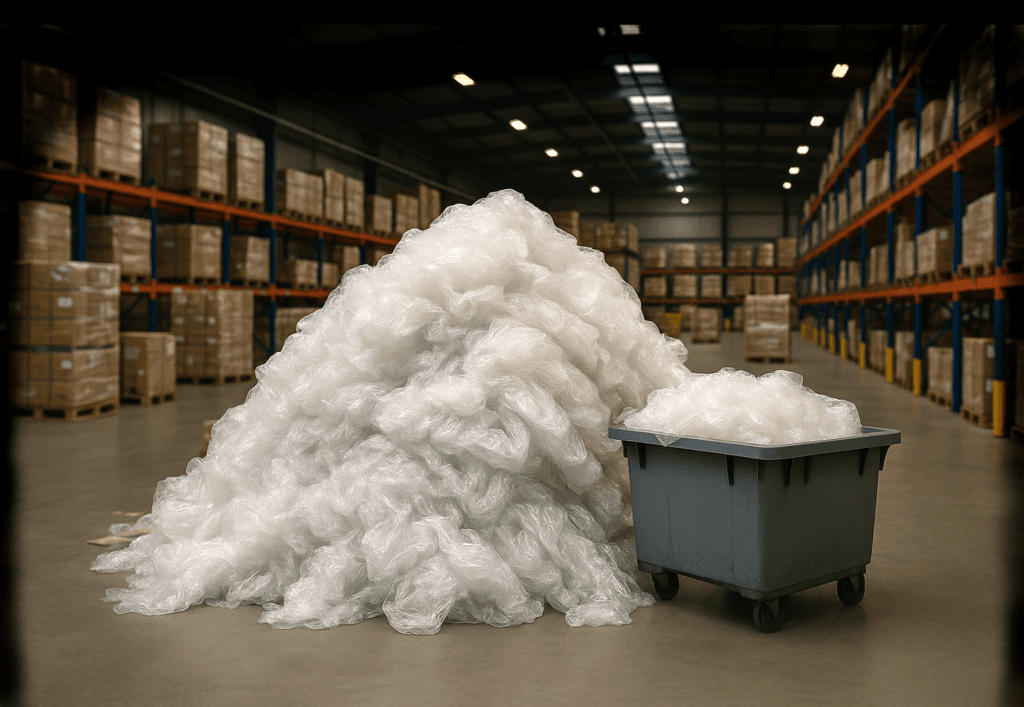
Replacing stretch film is no longer just an environmental goal. It is becoming an operational, economic, and compliance-driven necessity for industrial logistics.
Palletising without plastic stretch film is possible – and economically viable.
Why replace Stretch Film in Industrial Logistics?
Each year, packaging generates over 140 million tonnes of plastic waste worldwide. A significant share comes from stretch film used in industrial logistics.
Across Europe, billions of pallets circulate every year, generating large volumes of single-use industrial waste that is often not effectively recycled.
For companies handling hundreds of pallets per day, this represents kilometres of plastic and several tonnes of waste generated annually.
These volumes directly impact:
Across Europe, billions of pallets circulate every year, generating large volumes of single-use industrial waste that is often not effectively recycled.
For companies handling hundreds of pallets per day, this represents kilometres of plastic and several tonnes of waste generated annually.
These volumes directly impact:
- operational costs (procurement, handling, waste management)
- logistics efficiency (application, removal, access to goods)
- regulatory compliance (PPWR, AGEC and upcoming European frameworks)
- operator health (repetitive tasks contributing to musculoskeletal disorders)
As a result, industrial companies are increasingly reassessing the use of stretch film, particularly for internal, temporary, or storage flows. In these contexts, reusable solutions are becoming increasingly relevant in terms of both technical and economic considerations within supply chains.
The 3R strategy is becoming a practical lever: Reduce unnecessary packaging – Reuse compatible load containment solutions – Recycle materials at end of life
This site provides you with:
The 3R strategy is becoming a practical lever: Reduce unnecessary packaging – Reuse compatible load containment solutions – Recycle materials at end of life
This site provides you with:
- a clear overview of industrial, regulatory, and economic challenges related to plastic packaging
- a review of reusable alternatives adapted to logistics constraints
- a focus on pallet elastic solutions as a practical, proven and scalable approach compatible with QHSE and operational requirements
Replacing Stretch Film: Rethinking Industrial Palletisation
Stretch film is still widely used to stabilise pallets in warehouse operations. As a standardised solution, compatible with automated systems, it has become deeply embedded in industrial logistics processes, often by default, particularly for internal transfers and temporary storage.
In Europe, stretch film represents around 20% of total plastic demand, accounting for several million tonnes per year.
However, as operational, economic, regulatory, and environmental constraints evolve, its systematic use is increasingly being reconsidered.
In Europe, stretch film represents around 20% of total plastic demand, accounting for several million tonnes per year.
However, as operational, economic, regulatory, and environmental constraints evolve, its systematic use is increasingly being reconsidered.
Real Cost of Use
When factoring in recurring purchases, labour, supply management, waste treatment and inventory handling, the cost of stretch film becomes significant. Often spread across multiple budgets, it remains largely underestimated.
Negative Environmental Impact
Even with recycled content, stretch film is rarely recycled in practice. Its multi-material composition (additives, labels, tapes, residues) makes sorting and recycling extremely difficult.
Increasing Compliance Pressure
Operational Physical Constraints
While application is often automated, removal remains largely manual: cutting, repetitive movements, and constrained postures repeated dozens of times per day.
The Transition Starts at Pallet Level
Often overlooked in sustainability strategies, palletisation is in fact an immediate and practical lever to reduce industrial packaging waste.
Setting Practical Transition Objectives
Reducing logistics waste without disrupting operations
Reducing single-use plastic packaging is becoming a structuring objective within QHSE strategies, ESG commitments, and compliance with evolving regulations.
European regulation (PPWR), French law (AGEC), and traceability requirements (EUDR/FSC) increasingly integrate principles of reuse, material reduction, and measurable environmental performance.
Often considered a secondary function that is difficult to transform, internal logistics — including order preparation, picking, internal transfers, and temporary storage — is in reality one of the most immediate, visible, and actionable levers to initiate this transition.
European regulation (PPWR), French law (AGEC), and traceability requirements (EUDR/FSC) increasingly integrate principles of reuse, material reduction, and measurable environmental performance.
Often considered a secondary function that is difficult to transform, internal logistics — including order preparation, picking, internal transfers, and temporary storage — is in reality one of the most immediate, visible, and actionable levers to initiate this transition.
Key priorities identified by industrial operators:
These priorities are progressively guiding industrial companies towards more sober, reusable, and circular solutions, adapted to operational constraints without compromising performance.
Reuse: A Proven Industrial Lever
Across multiple industries, reuse is increasingly implemented to reduce packaging waste — not by eliminating plastic entirely, but by removing single-use where it is no longer justified.
The key lies in smart reuse: solutions that are robust, traceable, and easy to integrate without disrupting operations.
Use cases are active in the industry:
Air freight: reusable pallet covers (Tygan®, CargoCover™) used instead of stretch film.
Pharmaceutical industry: reusable insulated covers replacing single-use thermal films.
Automotive: textile covers in rotation systems with deposit management and quality control.
These approaches demonstrate large-scale feasibility, but often involve:
The key lies in smart reuse: solutions that are robust, traceable, and easy to integrate without disrupting operations.
Use cases are active in the industry:
Air freight: reusable pallet covers (Tygan®, CargoCover™) used instead of stretch film.
Pharmaceutical industry: reusable insulated covers replacing single-use thermal films.
Automotive: textile covers in rotation systems with deposit management and quality control.
These approaches demonstrate large-scale feasibility, but often involve:
Several industry organisations and federations confirm this trend, including FEPPEB.

Reuse — without adding operational complexity
The challenge for industrial operators is clear: integrate reusable solutions without adding complexity to logistics flows or requiring restrictive tracking systems.
Simple, low-constraint alternatives — without return logistics or complex deposit systems — such as pallet elastic solutions meet this requirement.
Simple, low-constraint alternatives — without return logistics or complex deposit systems — such as pallet elastic solutions meet this requirement.
A Reusable Solution Adapted to Industrial Logistics: Pallet Elastic
In a context of increasing regulatory pressure, QHSE objectives, and cost control, the pallet elastic offers a reusable solution that is simple to deploy and compatible with standard operations.
Made from natural rubber elastomer, mono-material and recyclable at end of life, it is designed for multiple reuse cycles. It secures a pallet in seconds, without tools, and integrates easily into internal, intersite, or temporary logistics flows.
Integrating a reusable solution within a circular logistics loop enables waste reduction at the source, without modifying infrastructure — while supporting compliance and environmental performance objectives.
Made from natural rubber elastomer, mono-material and recyclable at end of life, it is designed for multiple reuse cycles. It secures a pallet in seconds, without tools, and integrates easily into internal, intersite, or temporary logistics flows.
Integrating a reusable solution within a circular logistics loop enables waste reduction at the source, without modifying infrastructure — while supporting compliance and environmental performance objectives.
Pallet elastic is a reusable alternative to stretch film designed for internal logistics, pallet stabilisation, and short-loop operations.
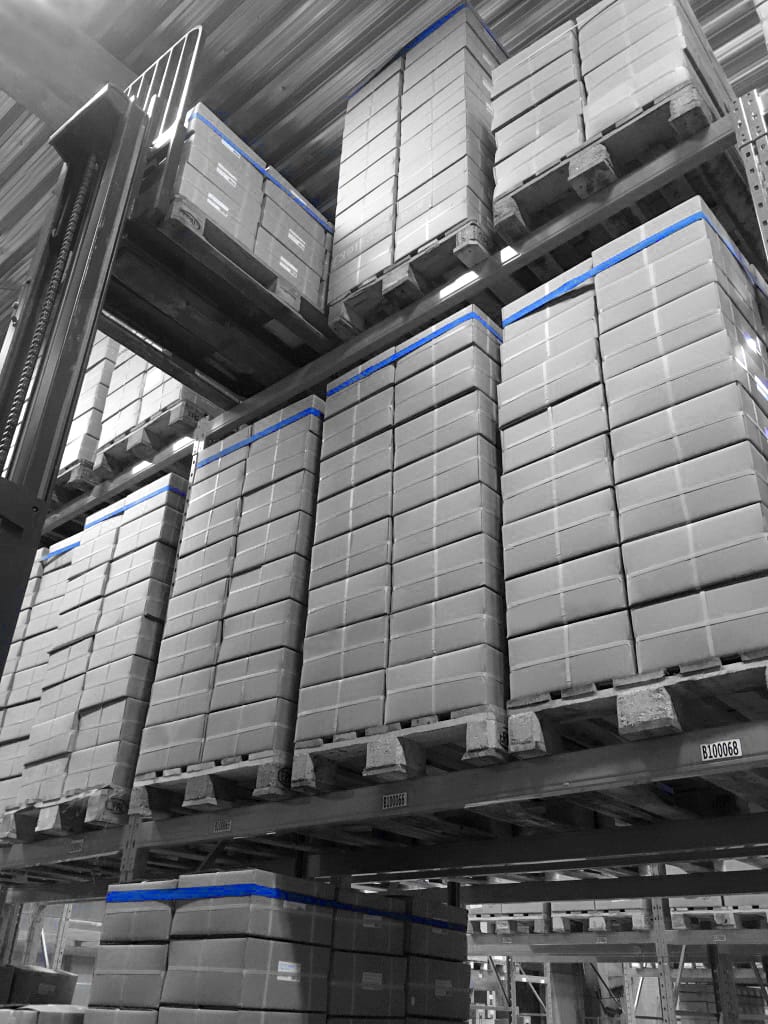
without significant loss of tension
manual or automated
generated at each use
with standard pallet formats (EUR 120 × 80 cm and 120 × 100 cm)
thanks to its mono-material composition
Total Cost of Ownership
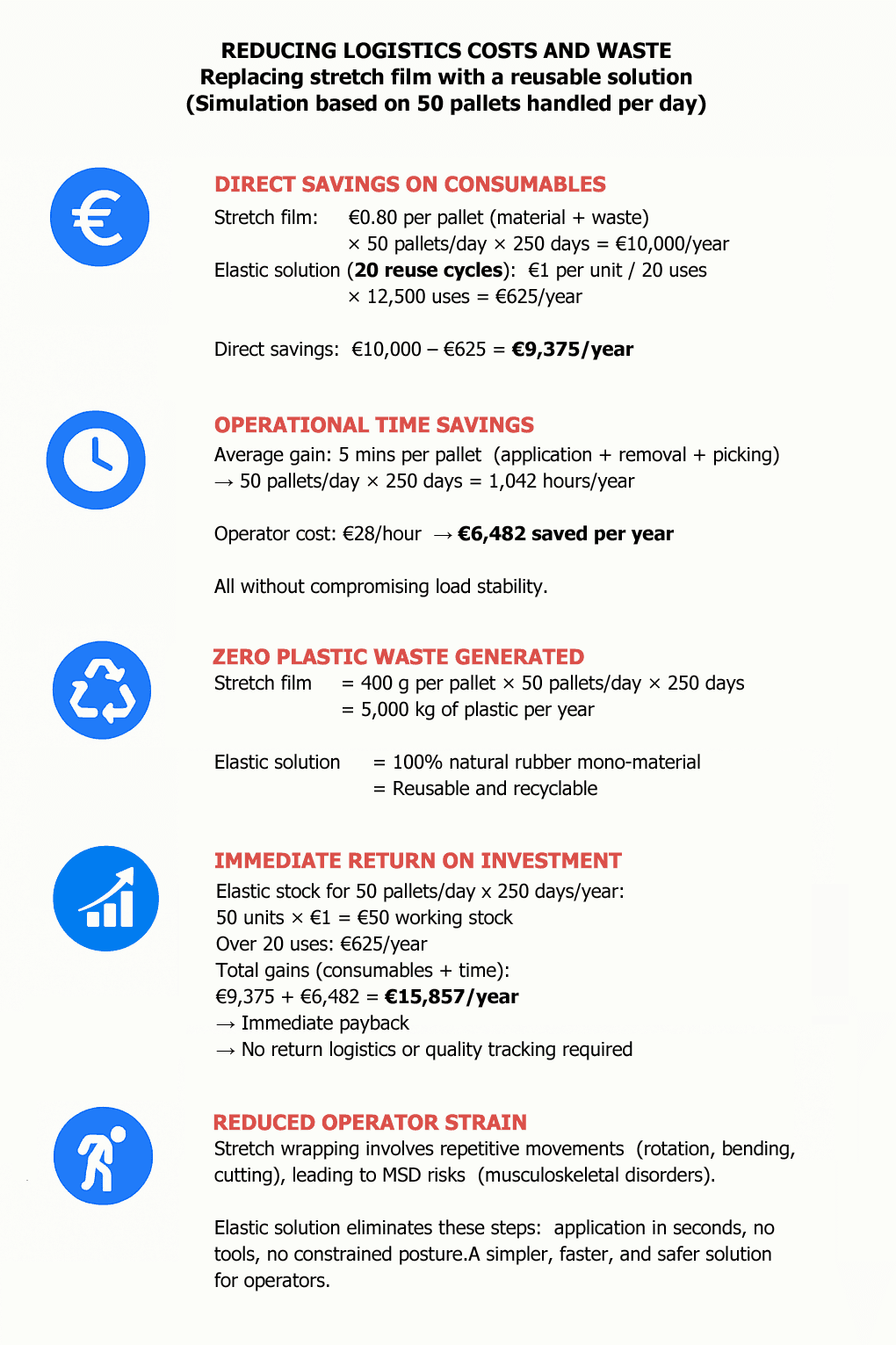
To be assessed over the product lifecycle rather than per unit. In controlled or short-loop logistics, payback is often achieved within the first cycles.
To be assessed over the product lifecycle rather than per unit. In controlled or short-loop logistics, payback is often achieved within the first cycles.
| CRITERIA | Sretch Film | Reusable Solution: Pallet Elastic |
|---|---|---|
| Usage | Single-use | Reusable multiple times |
| Wate generated | 400-800g per pallet | None |
| Application time | 60 to 90 seconds | 5 to 10 seconds |
| Required tools | Dispenser, cutter | None |
| Ergonomics | Constrained movements (rotation, cutting) | Simple handling, minimal effort |
| Compatibility | Standard pallets | Standard pallets |
| Unit cost | Low purchase cost | Higher unit cost |
| Total cost | Repeated at each use | Distributed across multiple uses |
| Recyclability | Limited: labels, tapes, multi-material | Good: mono-material natural rubber |
| Regulatory compliance | Increasingly restricted (PPWR) | Compatible with reuse objectives |
View quantified operational benefits
View technical documentation & certifications
Request a Starter Pack
View technical documentation & certifications
Request a Starter Pack
This type of solution illustrates how reuse can effectively address current industrial logistics challenges:
Operational Feedback from Industrial Users
We have completely removed stretch film from our internal flows.
The elastic solution is faster, reusable, and simplifies our operations.
The elastic solution is faster, reusable, and simplifies our operations.

Logistics Manager
Food industry – Roasting facility
Stretch film was often discarded after just a few minutes of transport.
The elastic solution solved this issue.
The elastic solution solved this issue.

Team Leader
Logistics center – Transport & Storage
We no longer need to cut and reapply film at every picking operation.
The elastic stays in place, saving time at each handling step.
The elastic stays in place, saving time at each handling step.
Warehouse & Shipping Supervisor
Retail chain – DIY stores
We implemented an automated application system on our preparation lines. The elastic is applied directly at the conveyor exit, with a higher throughput than stretch film.

Process Manager
Logistics center – E-commerce distribution
Single-Use Packaging is Being Phased Out in Europe
Industrial Logistics Must Adapt
Europe is reinforcing reuse principles and progressively limiting single-use packaging, including in industrial logistics.
Logistics and QHSE decision-makers must anticipate these changes to avoid rising costs, operational constraints, and compliance risks.
Logistics and QHSE decision-makers must anticipate these changes to avoid rising costs, operational constraints, and compliance risks.
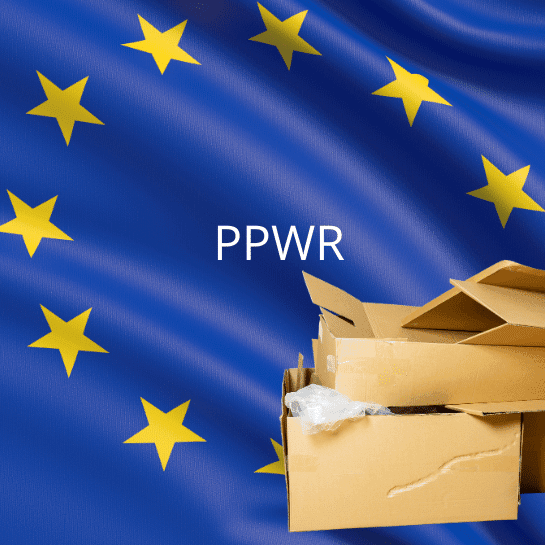

Upcoming Legislation (Belgium)
Objective: implementation of the Interregional Cooperation Agreement on packaging waste management — including reporting obligations and reuse incentives
Timeline: expected between 2025 and 2026
Impact: standardisation of packaging practices and promotion of reuse in B2B logistics flows
Timeline: expected between 2025 and 2026
Impact: standardisation of packaging practices and promotion of reuse in B2B logistics flows
European regulations are clearly steering industrial practices towards:
Act Now:
Cleaner, Compliant, and Reusable Logistics
Switching to reusable solutions does not require a complete overhaul of your operations. The key is to identify the right flows, test, and then deploy progressively.
5 steps for an effective implementation:
A Realistic and Measurable Approach
Adopting pallet elastic means:
Reducing single-use plastic is no longer just an environmental choice — it is part of a rapidly evolving regulatory, economic, and operational framework. Reusable solutions, such as pallet elastic, provide a concrete and immediately applicable response.
Acting now means anticipating constraints, reducing costs, and strengthening alignment with QHSE and ESG objectives.
Acting now means anticipating constraints, reducing costs, and strengthening alignment with QHSE and ESG objectives.